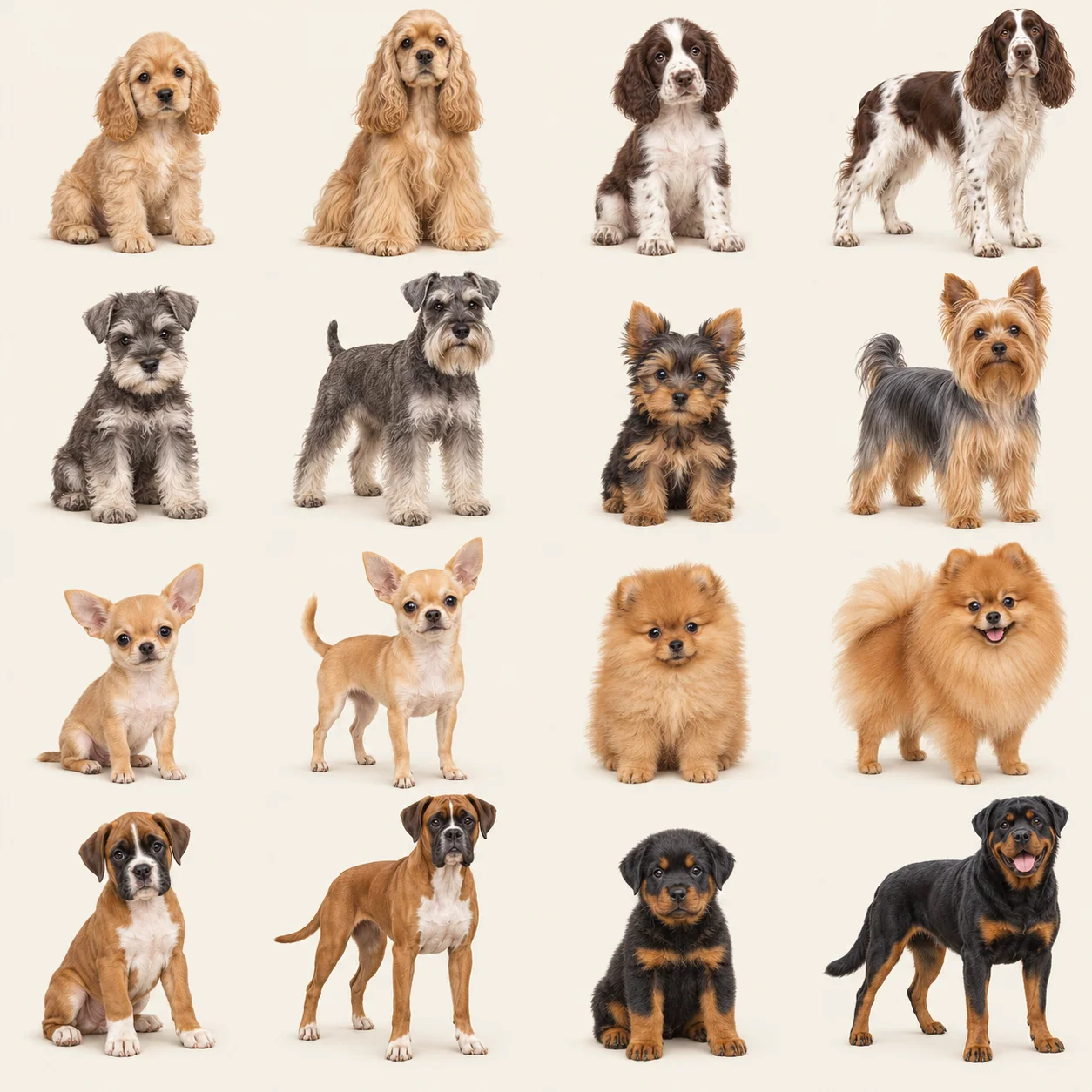
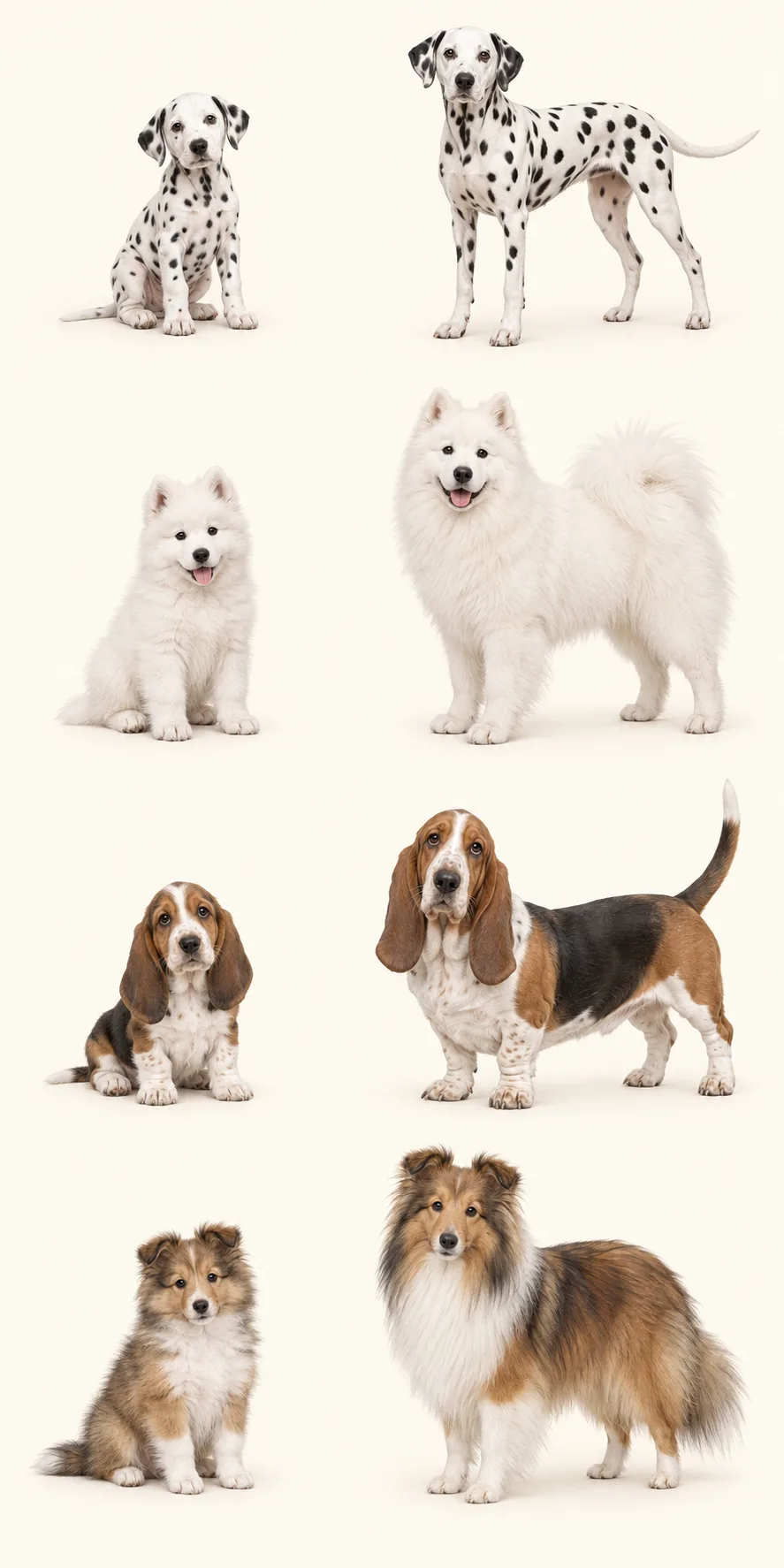
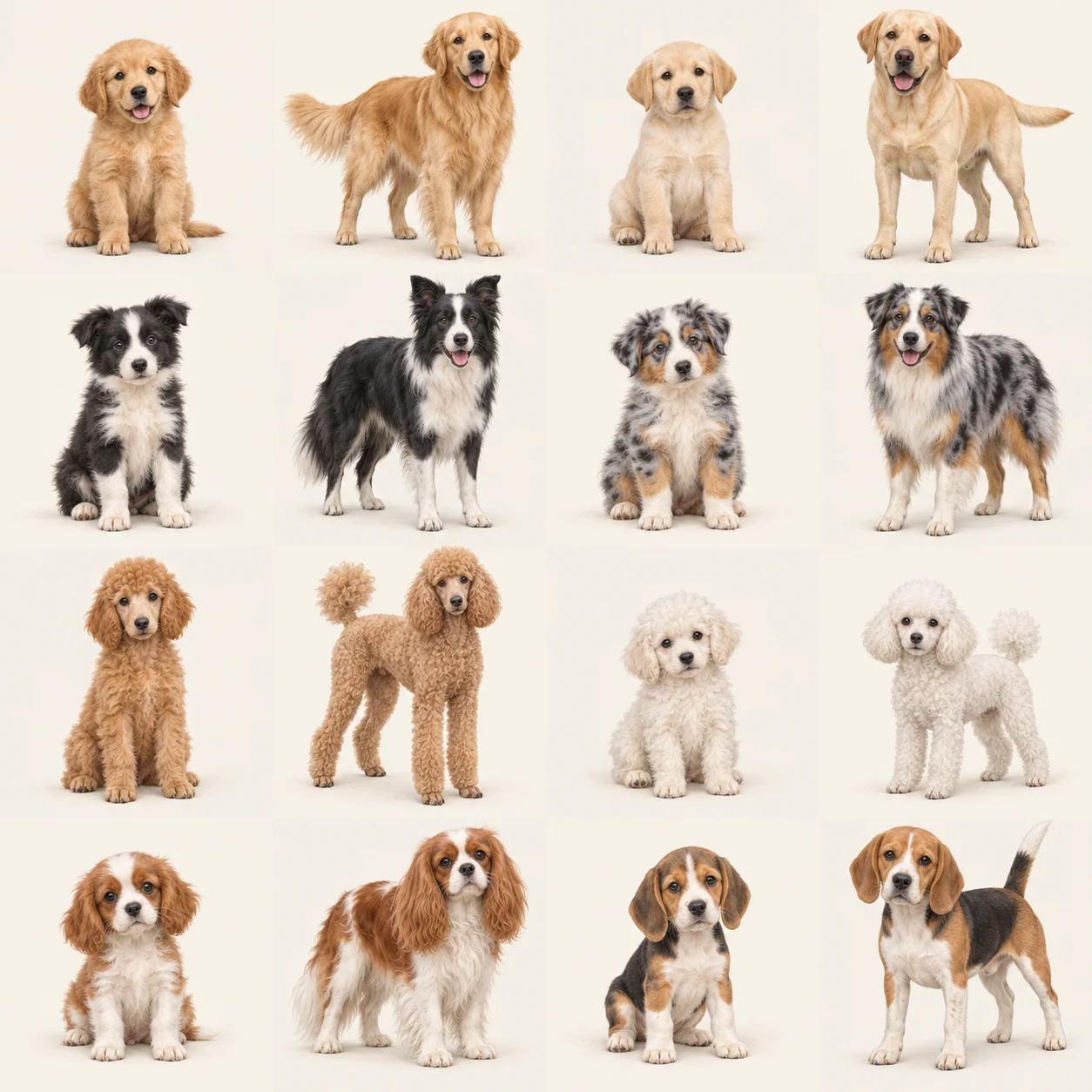
Puppy days
Reward calm greetings, lead skills and settling from the beginning. Use positive, gradual exposure to people and places, keeping expectations consistent as the puppy gains strength.
An athletic, alert working companion with strong family bonds and a protective nature. Dobermans often enjoy learning quickly and sharing purposeful activities with their people.
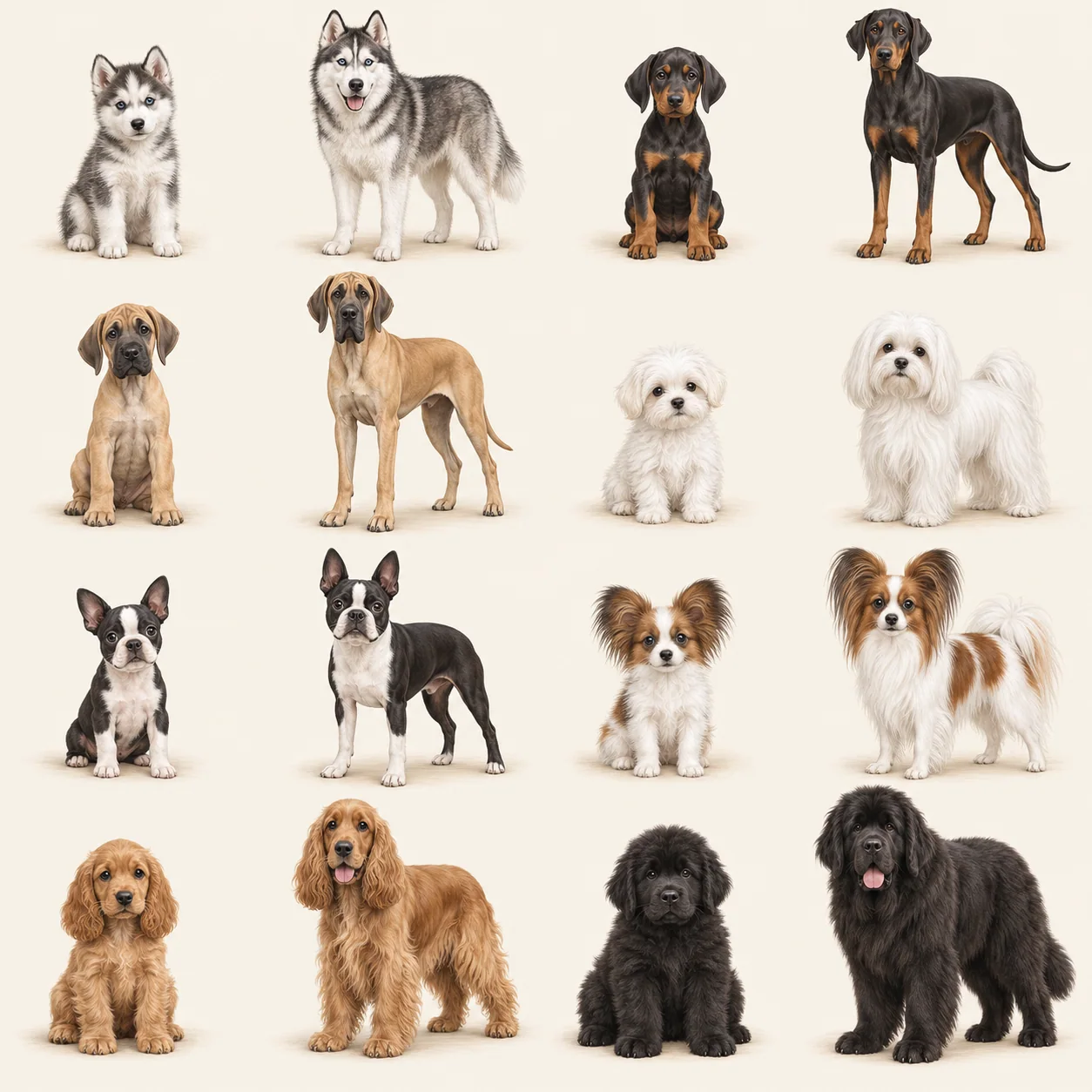
Illustrated puppy and adult examples.
Breed tendencies vary between dogs. Supervise children and dogs together. Cats and small pets need an individual compatibility assessment.
Our three levels group the AKC’s published five-point ratings: 1–2 becomes lower, 3 moderate, and 4–5 higher. The child rating describes young-child tendencies. These are general tendencies, not safety or compatibility guarantees.
AKC Doberman Pinscher breed traits · Reviewed 8 October 2026Reward calm greetings, lead skills and settling from the beginning. Use positive, gradual exposure to people and places, keeping expectations consistent as the puppy gains strength.
Keep long walks, secure play and obedience or tracking in the routine. Maintain social skills around unfamiliar people and assess interactions with other dogs and small animals.
A quick daily brush maintains the short coat; baths are occasional. Add substantial daily exercise, regular tooth brushing, nail trims and gentle checks for ear debris.
Worth planning for: Protective behaviour, strength and possible territorial responses to dogs make ongoing training and secure handling essential.
Reviewed 8 October 2026. Breed tendencies and mixed-background possibilities describe a starting point, not a promise about an individual dog.