Both are active, sociable retrievers that need training, company and a plan for shedding. The clearest practical coat difference is the Labrador’s shorter coat versus the Golden’s longer feathering—not a guarantee of an easier personality.
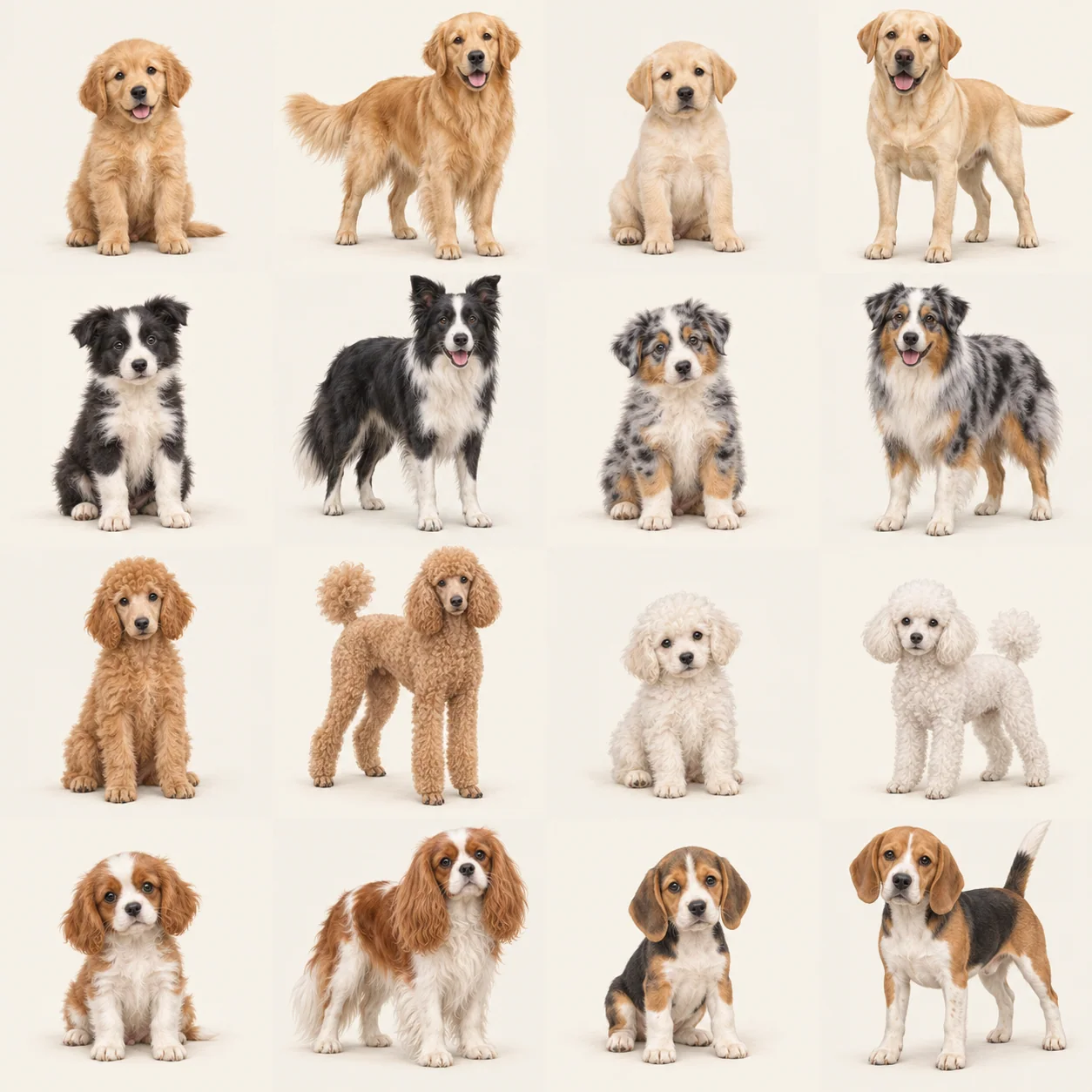
Illustrated examples; individual dogs and mixed backgrounds can look and behave differently.
What changes in everyday ownership?
The Labrador Retriever and Golden Retriever share retrieving backgrounds. AKC’s breed comparison describes their active, outgoing tendencies. Both can enjoy an involved household, but neither is a ready-trained family dog.
Scroll the table sideways to compare both breeds.
| Daily consideration | Labrador | Golden Retriever |
|---|---|---|
| Activity and learning | Active outings, play and positive training | Active outings, play and positive training |
| Coat upkeep | Short double coat; generally simpler brushing | Longer coat and feathering; more brushing and tangle checks |
| Hair in the home | Expect substantial shedding | Expect substantial shedding |
| Handling | Plan for a strong, large dog | Plan for a strong, large dog |
| Time alone | Assess the individual and arrange breaks | Assess the individual and arrange breaks |
A shorter coat still sheds
If coat maintenance is your deciding factor, the Labrador may fit a simpler brushing routine. That does not mean a hair-free home. AKC’s Labrador grooming guide describes care for the shedding double coat.
A Golden’s longer coat needs more attention, especially around feathering and places that tangle. AKC’s Golden Retriever grooming guide covers brushing and routine coat maintenance. Add muddy outings, drying and access to grooming space to your practical plan.
Compare an ordinary weekday
Think about what you can sustain when work is busy: walks, sniffing, play, learning and quiet rest. A garden can make toilet access easier, but it does not provide a complete daily routine. An enthusiastic retriever still benefits from patient teaching about greetings, loose-lead walking and settling.
Choose according to the dog’s current age, health and assessed activity needs. A breed guide is a starting point, not a prescription for an individual exercise programme. If your own routine is quieter, compare a broader range of dogs instead of assuming one retriever is automatically the calm option.
Children, pets and workdays
Friendly breed tendencies do not establish safety with children or compatibility with another pet. Large, bouncy dogs can need particular help with greetings and boundaries. Look at the individual dog’s history and use careful introductions and supervision.
Neither breed name proves comfort during a full working day alone. Make a realistic daytime company and break plan. A dog’s demonstrated routine is more useful here than a popularity ranking.
Which one should you shortlist?
If you enjoy active daily life and can accommodate a large dog, both deserve a closer look. A preference for simpler coat care may favour a Labrador; enjoyment of a longer coat comes with the Golden’s extra upkeep. Compare the full profiles and use the questionnaire to check the rest of your care preferences.
Puppies of either breed need extra time for toilet training, social learning and learning to settle. A grown dog with a known routine can make some practical needs easier to assess.
Match the care to your everyday
Use what you’ve learned to compare daily needs with your own routine.
Find my dog match More dog parent guidesSourced ownership guidance; individual needs vary. No veterinary review or validated compatibility prediction is claimed.